
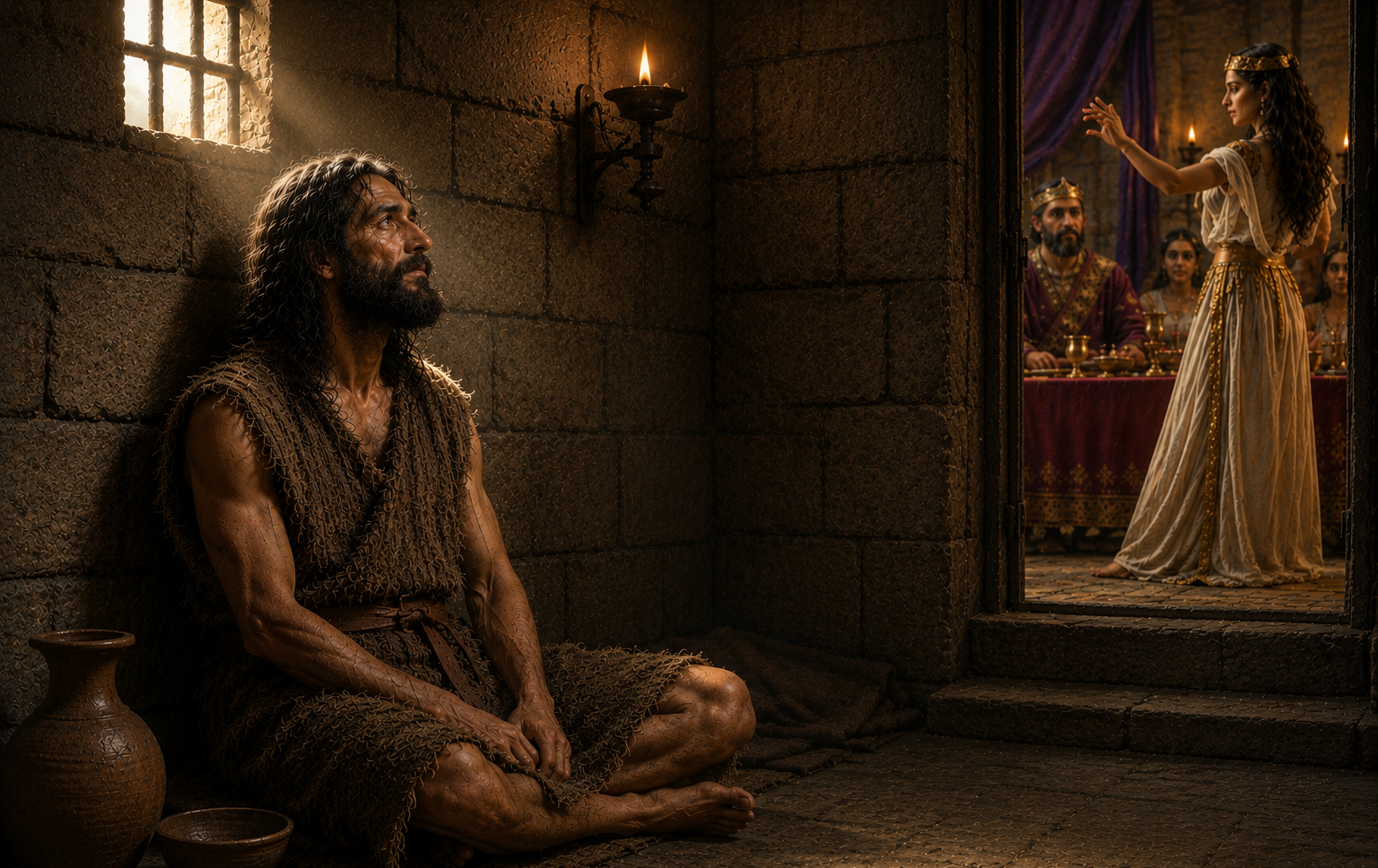
In our last study, we saw Jesus sending out the 12 disciples to neighboring towns and villages to proclaim the good news of the gospel. While we are waiting for the apostles to return from their short mission trip, Mark, as well as Luke, takes the opportunity to tell us about Herod and what happened to John the Baptist. We’re told that Herod heard about Jesus’ fame and that people were speculating as to Jesus’ identity, but Herod was convinced that John the Baptist, whom he had beheaded, was raised from the dead. Most likely he said that because his conscience was still troubling him for putting John, a righteous and holy man (v.20), to death. Mark, under the inspiration of the Holy Spirit, goes on to explain the reason that John was put to death. It is a sad story of a king who was enslaved to his own passions and lustful desires for pleasure, public praise, and high position. And John the Baptist got in the way of him being able to enjoy his sin, as John would continually tell him that it was not lawful for him to marry his brother’s wife. Herodias begrudged this and wanted John killed. And when the right opportunity came, she got her wish.
There is a clear contrast between King Herod and John the Baptist in terms of their lifestyles and life goals. The king lived for the pleasure of this world, while John lived to honor and please the Lord his God. One gained the world and lost his soul, while the other lost his life but gained the crown of life. (CF. Rev 2:10)
As you read the passage, consider the following questions:
- According to verse 20, King Herod heard John gladly and came under the conviction of sin, but he did not repent. What do you see is the danger of that in our lives?
- What should Herod have done when he found out what Herodias’ daughter wanted him to give her? And what does that teach us about making promises? (Ref Lev 5:4-6)
- What are some lessons you can take away from John’s life to help you remain faithful to the end?
May the Lord bless His word to all of our hearts this Sunday.